Key Takeaways
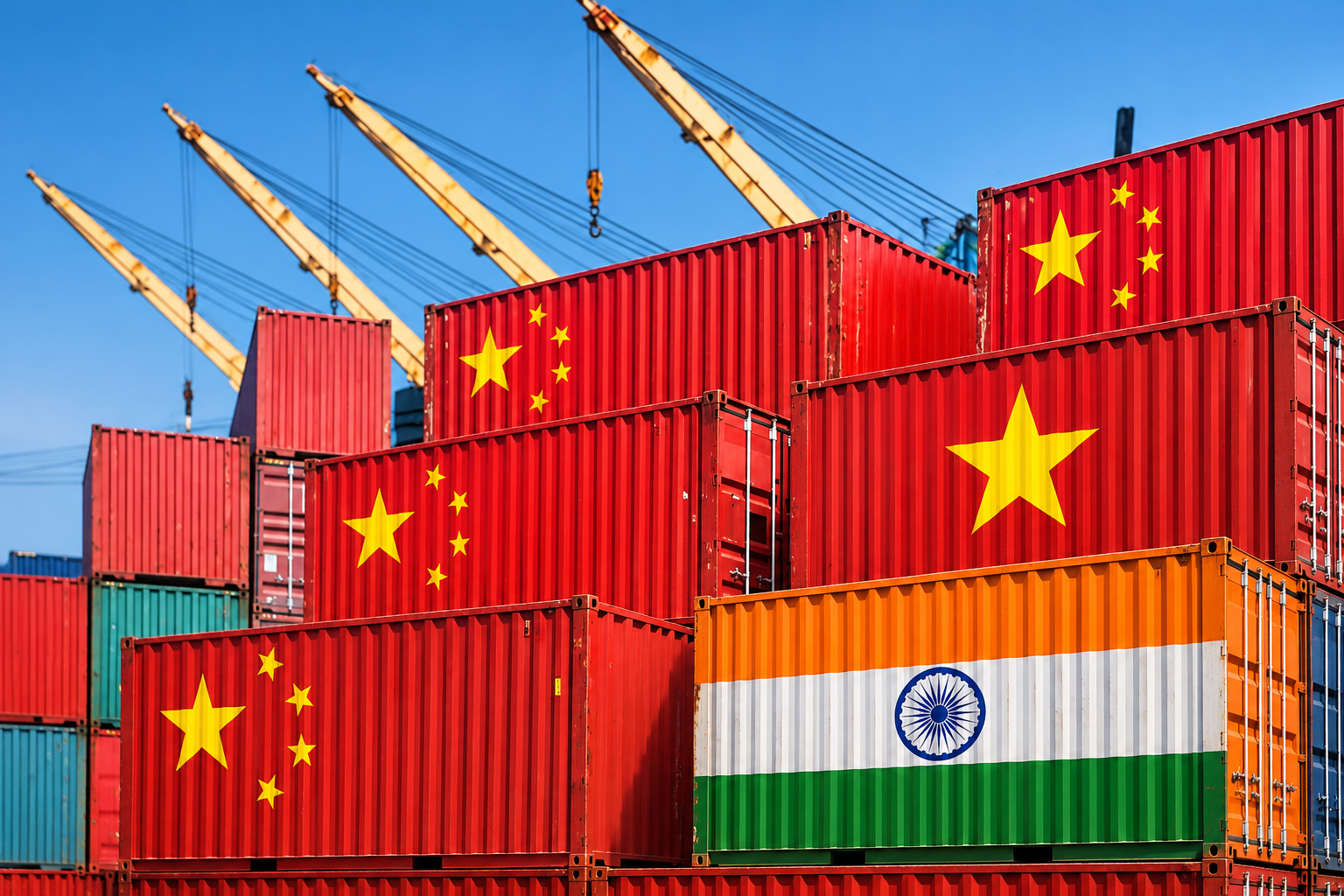
- A China Plus One strategy keeps some production in China while adding a second region, such as Vietnam or India, so disruption in one area doesn't stop supply.
- Some brands are shifting all their manufacturing out of China, but many are building China +1 strategies where production continues in two or more regions at the same time.
- Risks include volatile supply chains, uncertainty around production readiness, country-of-origin rules, and meeting existing quality standards.
- A China+1 strategy works best when your manufacturer has teams working across China and the regions you want to add.
Discover how smart brands diversify manufacturing without compromising quality or time to market.
Brands producing physical goods have, historically, focused their manufacturing efforts in China. The rise of the China Plus One strategy responds to several factors that create risk in remaining in a single manufacturing location.
Understanding the risks of diversifying your manufacturing strategy can help you select partners that minimize threats to production quality, scale, and speed.
Why brands are diversifying manufacturing beyond China
Relying on a single production source creates a single point of failure. While China is still one of the most established manufacturing hubs in the world, there are many factors that can slow production or increase costs:
- Supply chain issues
- Import tariffs on materials, resources, and tooling gear, as well as finished goods
- Security concerns due to geopolitical tensions
- Increasing labor costs, particularly around China’s coastal regions
That’s not to say that China isn’t enjoying success via manufacturing. In 2025, Chinese goods exports exceeded imports by $1.2 trillion, a new record for the country. But for many brands, rising costs are only part of the picture. Some firms may want more control over the manufacturing process or worry about intellectual property protections. Others may want to shift to new regions where manufacturing is still cost-competitive.
As countries like India become popular manufacturing hubs for brands like Apple, Samsung, and others, manufacturing costs are likely to rise over the coming years. Apple has had major success manufacturing in India. Smart brands see this success and want to emulate it but may want to consider the risks and ramifications first.
What happens when brands move production?
Brands rarely enter a multiregional manufacturing program alone. They may work with agencies that connect them with multiple vendors, or contract manufacturers that offer end-to-end service. Global sourcing partners bring cross-cultural knowledge, experience with various manufacturing partners, and the know-how to tailor production to meet growing brands’ needs.
Understanding what transfers and what must be rebuilt can help you estimate the cost and timeline of shifting or diversifying production.
| Transferrable assets | New requirements |
|---|---|
| Product designs and plans | Check intellectual property legalities |
| Material lists | Confirm the machines provided by the new factory have the same capabilities (e.g., CNC, molding, etc.) |
| Tooling, where factories confirm they have compatible machines | Correct production line alignment and coordination (machine calibration, resource allocation, etc.) |
| Quality assurance requirements | Check compliance with international standards |
Explore Genimex’s full range of process capabilities.
Not every region follows the same compliance standards for sustainability, waste, or durability. Challenges can occur when your firm needs to find a factory that combines cost-effectiveness with the ability to work to existing plans and material requirements with high accuracy.
It’s important to note that companies breaking out of China-focused manufacturing without a logistical partner are not without resources. A company can choose to visit a factory themselves to assess suitability or hire a team to perform this task. However, this requires a great deal of planning, time, and energy, which some brands may struggle to balance with product development, marketing, and other critical tasks.
What breaks when you move a manufacturing program out of China?
With the complexities involved, how are companies implementing the China + 1 approach to diversify manufacturing? The fact is that some brands are encountering unexpected problems:
- If a product isn’t substantially transformed in the new region, US Customs can still treat it as made in China for tariff purposes, so moving final assembly alone isn’t always enough.
- Cultural misunderstandings and language barriers may occur when brands move to a new region without the support of an experienced team.
- Reclaiming tooling and molding equipment can be challenging without someone managing the transfer.
- New factories may not have been inspected to the same standard as more established factories, leading to quality concerns.
There’s also the simple fact that manufacturing in China is well established, with factories and manufacturing centers or parks built around the transfer of materials and resources, and exports. Partners here are highly experienced in all types of consumer goods manufacturing, which is why China remains a top manufacturing destination, despite potential cost concerns. Some manufacturing partners in other regions may struggle to meet the standards set by China.
Costs can also be less than clear-cut. Lower labor expenses in regions outside China may be negatively offset by the additional cost to import resources, materials, or components that aren’t available locally.
All these issues are possible to navigate, but only when brands choose to research and select partners with experience in the relevant regions.
Why does a cheaper region sometimes cost more in year one?
In any hardware industry, supply chain risk is an ongoing concern. Geopolitical issues may also impact production, as can fluctuating tariffs. Manufacturing diversification can, in many cases, reduce exposure to these risks. Operating out of more than one region gives you the option to scale up production with one factory if the other is impacted by supply chain bottlenecks.
However, some brands may find that the first year after shifting production out of China, their costs increase. This can be due to:
- The initial outlay of funds to mobilize the transition
- Scaling production up from zero to desired rates with a new manufacturing partner
- Transporting essential materials over a longer distance or sourcing components not available locally
- Costs associated with multiple vendors, e.g., sourcing partners, logistics specialists, translators, and quality assessors
One reason many growing brands work with an end-to-end contract manufacturer is that it simplifies costs; you contract with one company instead of several vendors, and that company is responsible for quality across each factory.
How do you know if a second-region factory is ready before you cut a PO?
Placing your first purchase order (PO) with a new factory is daunting, especially if you don’t have a team or liaison on the ground in the region. You must trust local inspection services or reports directly from the factory. You may want to ask what other brands the factory is working with and what products they’re currently producing on a scale. This may offer reassurance that the factory is experienced.
One of the most powerful supply chain risk-mitigation strategies is working with an end-to-end contract manufacturer that has experience with factories in various regions. They can advise which factories are ready for your product, volume, and quality standards.
How do you keep quality the same when you move production?
Moving production means a new team, new equipment, and new suppliers working from the same plans. Keeping quality consistent comes down to making sure nothing gets lost in that handoff. Most brands that move well take a few simple steps:
- Agree on what “right” looks like before anything moves. Specifications, test requirements, and an approved reference sample give the new factory something concrete to match.
- Start small. A pilot run shows how the line performs before you commit to full volume.
- Keep China running. Let your existing factory carry production until the new one consistently passes inspection.
- Check along the way, not just at the end. In-line inspections catch problems while they can still be fixed. Final inspections confirm the result.
- Compare side by side. Put early units from the new factory next to units from the original. Small differences are easier to spot this way than on a spreadsheet.
None of this is complicated, but skipping a step is usually where quality gets lost.
Diversification is working for many companies. The key is to research risks and prepare for change.
Research from 2025 indicates that firms that invest in their risk management infrastructure are more likely to pursue diversified manufacturing strategies, and that this likelihood grows sharply as that investment increases.
The brands that diversify successfully treat it as an ongoing plan, not a one-time move. They know where their risks are and work with a manufacturer that can manage production across regions.
FAQs: China Plus One Strategy
Some firms are going alone, trying to cut costs by sourcing local manufacturing partners in their target regions. They may visit factories in their chosen region, hire specialist teams to assess partners, and work with in-region quality assurance experts. Smart brands work with partners that offer end-to-end service, from in-house design and engineering to production and quality.
Brands across many industries are benefiting from investing in a China + 1 strategy. Smart technology brands like Apple and Samsung have moved major chunks of their production to India. Apparel brands are shifting manufacturing to Vietnam. Consumer goods brands with interests in health, beauty, and other sectors are also moving into Southeast Asia.
A China Plus One strategy means retaining some manufacturing presence in China while shifting some of it to another region, such as India or Southeast Asia. When risks are properly managed, multi-regional manufacturing can support global supply chains by making production more agile and scalable, reducing exposure to geopolitical and tariff risk.