
The horse is one of the most dynamic signs in the Chinese zodiac, and 2026 is the year to gallop into the spotlight. As the Chinese New Year (CNY) approaches, businesses with manufacturing partners, suppliers, and clients in Asia should start planning early. The Year of the Horse is an important celebration and can significantly impact operations, production, and shipping. Understanding its timing and cultural importance will help businesses run smoothly through Q1.
What the Energetic Horse Means for Business
Chinese New Year 2026, or Lunar New Year, lasts 15 days from Tuesday, February 17, to Tuesday, March 3. It is also known as the Spring Festival, an important traditional holiday in many parts of Asia. The celebrations begin on Chinese New Year’s Eve with a large family dinner and the exchange of red envelopes (hong bao) filled with money for luck. The final day (Lantern Festival) is marked by lighting colorful lanterns and enjoying sweet rice dumplings (tangyuan).
In Chinese culture, the horse represents strength, freedom, action, and ambition. Now is the best time to align your brand with themes of expansion, innovation, and bold leadership. For businesses, it’s a time to pause operations, express appreciation to employees and partners, and prepare for a prosperous year ahead.
How Will the Chinese New Year 2026 Impact the Supply Chain?
Chinese New Year affects almost every link in the supply chain. Businesses should expect a potential four- to six-week slowdown in production due to:
- Factory closures: Manufacturing facilities across parts of Asia shut down during CNY. Others even close a couple of weeks before February 17. Production resumes in late February or early March, depending on worker availability. If an order is incomplete before shutdown, expect a delay into March or later.
- Labor turnover: After the Chinese New Year, it’s common for factory workers not to return to their jobs. Some factories reopen with fewer staff or new hires to train, leading to longer lead times and lower output in the weeks after the holiday.
- Project approval delays: Many companies finalize projects, complete budgets, and clear tasks before CNY begins. After that, business decision-making slows down and pauses altogether during the new year. If you need sign-offs on product revisions, payments, or packaging, get them done in early January to avoid delays until March.
- Shipping delays: In the weeks leading up to the holiday, businesses rush to move goods before the factory closures during Chinese New Year, causing a backlog. Even if products are ready, they might sit in warehouses or ports, delaying the timeline and increasing shipping costs. Avoiding Chinese New Year shipping delays requires booking freight months in advance.
How to Prepare for Chinese New Year 2026
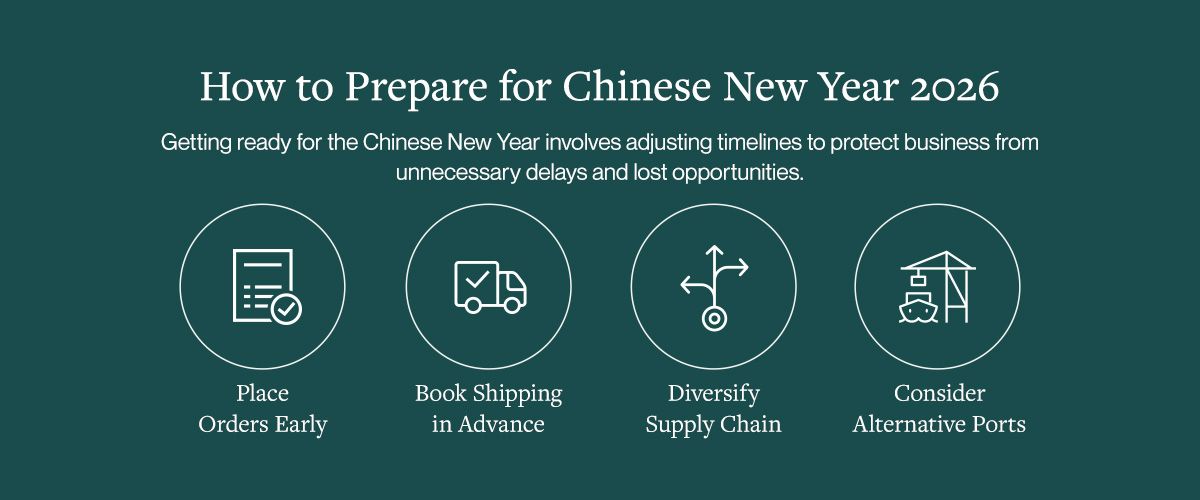
Getting ready for the Chinese New Year involves adjusting timelines to protect business from unnecessary delays and lost opportunities.
- Place orders early: To ensure timely production and shipment, all production orders must be placed three to four months before the holiday.
- Book shipping in advance: Ensure your goods are packed and booked for shipping by late January, or they might be stuck until March. Work closely with the freight forwarder to plan your logistics timeline so goods leave the factory by the end of January.
- Diversify supply chain: Work with manufacturers in other regions to mitigate the risk of overreliance on China.
- Consider alternative ports: Secure container space months in advance and distribute shipments across several ports to avoid delays.
Chinese New Year logistics planning offers businesses an opportunity to optimize supply chain operations. It is a time to conduct an in-depth review of the supply chain process and identify vulnerabilities. Use the period to build trust and deepen collaboration with suppliers.
FAQs
When Exactly Is the Chinese New Year 2026, and How Long Will Production Be Affected?
Most factories close for two to four weeks, but some stop accepting orders even earlier. For 2026, factory shutdowns are anticipated to start around January 25 in preparation for the Chinese New Year on February 17, with production gradually resuming on March 3rd.
How Far in Advance Should We Place Orders to Avoid Disruptions During the Chinese New Year?
Place orders by late November to secure production slots before factories start winding down for the holiday, and book freight space at least four to six weeks before CNY.
How Will Shipping Costs and Timelines Change During the Year of the Horse Celebrations?
The effects of CNY on global supply chains happen in three phases:
- Pre-holiday rush: Manufacturers accelerate production to fulfill orders before a shutdown, which strains resources, creates port backlogs, and raises freight costs.
- Holiday shutdown: Factories close, no new orders are processed, and shipments face delays due to logistics operations.
- Post-holiday recovery: Worker shortages are slowing factory ramp-ups, and pressure on logistics networks is perpetuating delays.