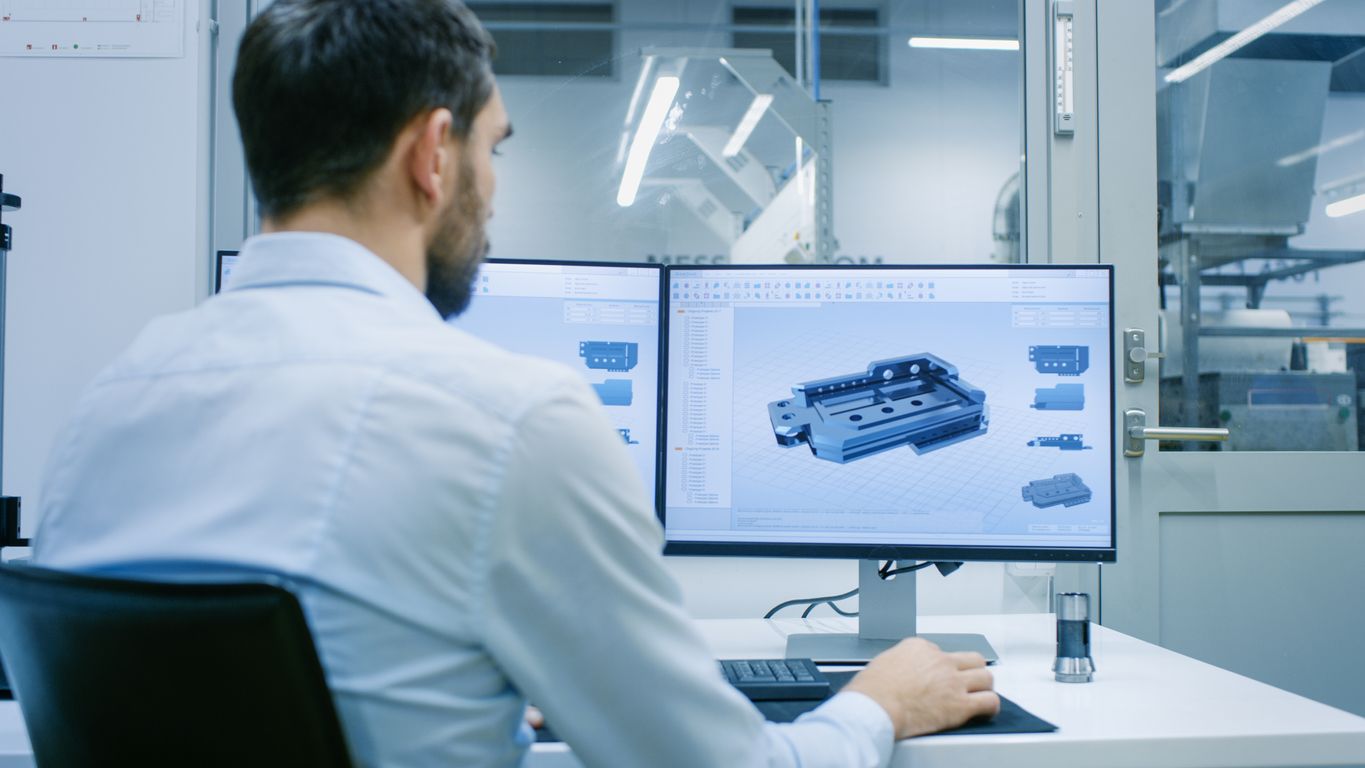
Despite the allure of a functioning prototype, there are often far more design changes needed for mass manufacturing than meets the eye. While companies tend to take the “build it and they will come” perspective for new products, a prototype that isn’t designed for scalability is a big predictor of product failure. Proper prototyping is the key.
The Prototype Paradox
While it’s commonly believed that prototypes set you up for manufacturing success, they can also hinder your progress. The core problem with prototyping is that it often fails to consider how the design translates to production at scale. Function is essential, but it’s not the only factor that needs to be considered when designing a product.
During the prototyping stage, various approaches can be used to bring a single version of a product to life. Certain materials may be selected, and production methods such as 3D printing may be used that work well for a single iteration. When it’s time to manufacture at scale, these approaches lead to production delays and excess waste, resulting in lost money on both accounts.
Prototyping often carries the illusion of readiness. Founders often believe that having a functioning prototype means it’s time to move into mass manufacturing. Ultimately, more thought is required to scale a prototype for mass production.
Turtlebox — a rugged, portable outdoor speaker — experienced the challenges of scaling for mass production firsthand. When the company had to meet market demand, it was challenged by the cost of maintaining both audio quality and durability as it scaled up. Multiple rounds of prototyping enabled Turtlebox to test and optimize key aspects, including IP67 waterproofing, mechanical robustness, appearance, and cost efficiency.
The Five Manufacturing Killers That Prototyping Reveals
Prototyping uncovers five key manufacturing setbacks:
- Material behavior at scale: A material that works well for one product might be too time-consuming to work with or costly to source for thousands of products.
- Assembly complexity: Complex assemblies in prototypes can increase the likelihood of human error during assembly on the production line.
- Quality consistency: Tolerances can be overlooked during prototyping, resulting in minor deviations during manufacturing that compromise product quality or lead to failure.
- Supply chain reality: Components used in a prototype may be subject to availability issues or significant cost fluctuations, leading to supply chain disruptions.
- Regulatory compliance: Many products are subject to industry requirements that can be easily overlooked during prototyping, potentially resulting in a noncompliant product during manufacturing.
The Smart Prototyping Strategy
Transitioning from prototyping to manufacturing is possible with the right strategy — progressive validation. This approach is an aspect of Design for Manufacturing (DFM) that tests prototypes in three key areas: functionality, manufacturability, and scalability. Through a range of testing protocols, teams can predict manufacturing success by considering the application of a prototype’s design in a mass production environment.
DFM factors in potential production bottlenecks, supply chain risks, sourcing, complexity, and more to create a prototype that’s reproducible on a massive scale. By considering more than functionality, companies can save on manufacturing costs and avoid the failed products that often lead to failed startups.
ROI Reality Check
When your company prototypes the right way, you see the ROI. Without proper prototyping, your company incurs the costs of manufacturing failures, which can result in product loss, a slower time-to-market, or a failed launch overall. If you’re a startup, a failed product could mean the end of your company.
Investing in proper prototyping saves you from costs in production and often accelerates time-to-market with a more seamless transition to manufacturing. Plus, prototyping with DFM also provides risk mitigation. With more factors considered during the prototyping process, you can avoid the costly pivots that often occur in mass manufacturing.
Red Flags: When Your Prototype Isn’t Manufacturing-Ready
During the prototyping process, certain signs indicate that your prototype may require adjustments. Factors like complicated assembly, time-consuming production processes, and challenging component sourcing can all be indicators.
To prepare a prototype for mass manufacturing, ask yourself the following:
- How much do you need to spend on materials per product?
- How long does it take to produce one unit?
- Are there alternative processes that can be used to create your product?
- What components can be combined or omitted to reduce complexity?
- What are the tolerance requirements? Can you meet them in mass manufacturing?
- Does your prototype meet industry standards? If not, what needs adjustment?
The Genimex Approach
Genimex specializes in DFM to bridge the gap between prototyping and manufacturing. With our professional team, we see your prototype from a mass manufacturing perspective and identify the fixes for scalability on the production line. Successful projects like Tumbler and Uproot Clean speak to our capabilities.
Get started with Genimex today to take your product vision from prototype to mass manufacturing.